
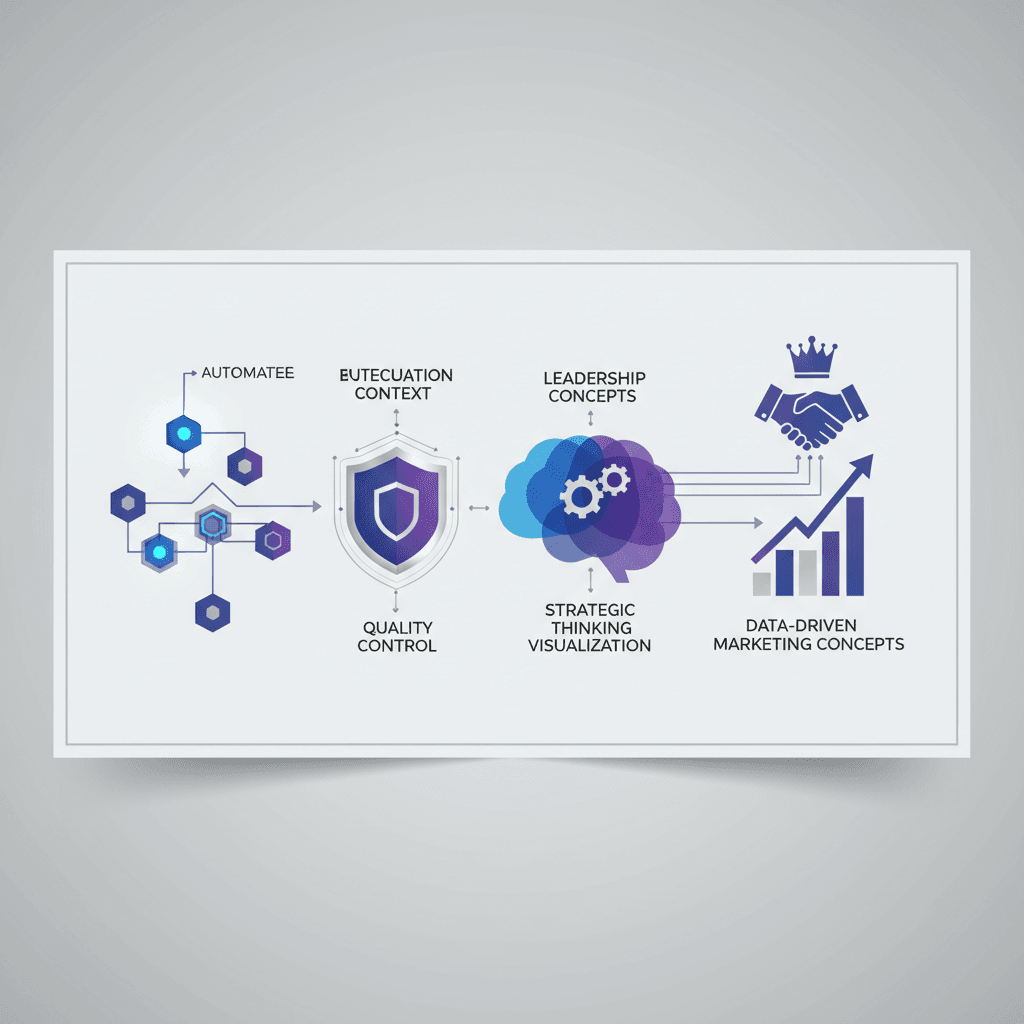
The final challenge in building intelligent marketing systems isn't generating content or developing strategy. It's executing marketing workflows with quality, efficiency, and brand compliance. Execution Context, the fourth pillar of Marketing Context Engineering, transforms AI systems from content generators into complete marketing workflow managers.
What is Execution Context in AI Marketing?
Execution Context is the systematic encoding of your marketing workflows, quality standards, approval processes, and operational requirements into AI systems. This enables AI to not only create marketing content but to manage the entire marketing process from strategy to publication with appropriate quality controls.
Core Components of Execution Context
- Workflow Architecture: Step-by-step marketing process documentation and automation
- Quality Assurance Protocols: Standards, checkpoints, and validation requirements
- Approval and Review Systems: Governance processes and escalation procedures
- Channel Management: Platform-specific requirements and publishing protocols
- Performance Monitoring: Tracking, optimization, and continuous improvement systems
Why Execution Context Engineering is Essential
End-to-End Automation
Execution Context enables AI systems to manage complete marketing workflows, from initial strategy development through content creation, review, approval, and publication.
Quality Assurance at Scale
Built-in quality controls ensure all AI-executed marketing maintains brand standards and compliance requirements without constant human oversight.
Operational Efficiency
Execution Context eliminates manual handoffs and approval bottlenecks while maintaining appropriate governance and quality standards.
How to Engineer Execution Context into AI Systems
1. Workflow Architecture Development
Marketing Process Mapping
- Content planning and calendar development workflows
- Content creation and optimization processes
- Review, approval, and revision procedures
- Publishing and distribution protocols
- Performance monitoring and optimization cycles
Process Automation Framework
- Automated task sequencing and dependency management
- Workflow trigger conditions and execution criteria
- Exception handling and error recovery procedures
- Integration points with external tools and platforms
2. Quality Assurance Integration
Quality Standards Framework
- Content quality criteria and evaluation metrics
- Brand compliance verification and validation
- Fact-checking and accuracy requirements
- Legal and regulatory compliance protocols
Automated Quality Control
- Real-time quality assessment and scoring
- Automated compliance checking and validation
- Quality threshold enforcement and escalation
- Continuous quality improvement and optimization
3. Approval and Governance Systems
Approval Workflow Architecture
- Stakeholder approval requirements and authority levels
- Review process automation and notification systems
- Revision management and version control
- Escalation procedures and timeline management
Governance and Compliance
- Regulatory compliance verification and documentation
- Brand guideline enforcement and monitoring
- Risk assessment and mitigation protocols
- Audit trail maintenance and reporting
Execution Context Implementation Strategies
Workflow Optimization and Automation
Process Streamlining: Identify and eliminate inefficiencies in current marketing workflows while maintaining quality and governance requirements.
Intelligent Task Management: Implement AI systems that can prioritize, sequence, and execute marketing tasks based on strategic importance and resource availability.
Exception Management: Develop sophisticated error handling and exception management to ensure workflow continuity even when unexpected issues arise.
Quality Control Architecture
Multi-Layer Quality Validation: Implement multiple quality checkpoints throughout the marketing workflow to catch issues early and maintain high standards.
Automated Compliance Monitoring: Build continuous compliance monitoring that verifies brand guidelines, legal requirements, and quality standards in real-time.
Performance-Based Quality Improvement: Create feedback loops that improve quality standards based on performance data and market effectiveness.
Execution Context Application
Example: Content Marketing Workflow Automation
A composite example, not a client result.
Traditional Manual Process:
- Marketing team brainstorms content ideas (2 hours)
- Content calendar development and approval (1 day)
- Content creation and writing (3 days)
- Review and revision cycles (2 days)
- Final approval and compliance check (1 day)
- Publishing and distribution (0.5 days)
- Performance monitoring setup (0.5 days)
Total Time: 8 days with multiple human handoffs
Execution Context Automated Process:
- AI strategic content planning with business context (15 minutes)
- Automated content creation with brand and strategic context (30 minutes)
- Built-in quality assurance and compliance checking (5 minutes)
- Automated stakeholder notification and approval workflow (2 hours for human review)
- Publishing automation across all channels (10 minutes)
- Performance monitoring and optimization setup (automatic)
Total Time: 3 hours with quality maintained or improved
Workflow Efficiency Comparison
Speed Improvement: 96% reduction in execution time
Quality Enhancement: Consistent quality standards with reduced human error
Resource Optimization: Team focuses on strategy instead of tactical execution
Scalability: Same process handles 10x content volume without additional resources
Execution Context Integration with Other Pillars
Execution + Business Context
Workflow priorities and resource allocation align with competitive dynamics and market opportunities identified through business context.
Execution + Brand Context
Quality assurance protocols ensure brand compliance and voice consistency throughout all executed marketing workflows.
Execution + Strategic Context
Workflow automation prioritizes and executes marketing activities based on strategic importance and goal alignment.
Advanced Execution Context Capabilities
Intelligent Workflow Adaptation
AI systems that can modify workflows based on performance data, market conditions, and strategic priorities.
Predictive Quality Management
Quality systems that anticipate potential issues and implement preventive measures before problems occur.
Cross-Platform Orchestration
Execution context that coordinates marketing activities across multiple platforms, tools, and channels with unified governance.
Measuring Execution Context Effectiveness
Operational Efficiency Metrics
- Workflow completion time and cycle efficiency
- Quality error rates and compliance scores
- Resource utilization and productivity improvements
- Automation success rates and exception handling
Quality and Compliance Indicators
- Brand compliance and quality standard adherence
- Error detection and prevention effectiveness
- Approval process efficiency and timeline performance
- Regulatory compliance and risk mitigation success
Common Execution Context Implementation Challenges
Workflow Complexity Management
Challenge: Complex marketing processes create difficult-to-automate workflows
Solution: Break complex processes into manageable components with clear automation boundaries
Quality vs. Speed Balance
Challenge: Maintaining quality while achieving automation speed improvements
Solution: Implement intelligent quality thresholds and adaptive quality controls
Change Management
Challenge: Team resistance to automated workflow changes
Solution: Gradual implementation with clear value demonstration and team involvement
Execution Context Best Practices
Workflow Design Principles
- Clear process documentation and requirement specification
- Modular workflow components for flexibility and maintenance
- Exception handling and error recovery built into all processes
- Integration points clearly defined and well-documented
Quality Assurance Framework
- Multiple quality checkpoints with appropriate escalation
- Automated compliance monitoring and violation prevention
- Performance-based quality improvement and optimization
- Clear quality standards with measurable criteria
Getting Started with Execution Context Engineering
Execution Context Assessment
- How much time does your team spend on manual marketing workflow management?
- What quality control bottlenecks slow down your marketing execution?
- How consistent are your approval processes and quality standards?
- What marketing workflows could be automated while maintaining quality?
Implementation Roadmap
- Workflow Documentation: Map current marketing processes and identify automation opportunities
- Quality Framework Development: Establish measurable quality standards and compliance requirements
- Automation Architecture Design: Create execution context systems for workflow management
- Pilot Implementation: Start with high-impact, low-complexity workflow automation
- Performance Optimization: Continuously improve execution context based on results
The Future of Marketing Execution
As AI systems become more sophisticated, Execution Context will evolve to include predictive workflow management, intelligent resource allocation, and adaptive quality systems. Organizations that master Execution Context engineering will achieve unprecedented marketing efficiency while maintaining or improving quality standards.
Ready to automate your marketing workflows with intelligent quality control? Execution Context transforms marketing from a series of manual tasks into a strategic system that operates efficiently at scale.
Complete Marketing Context Engineering
Execution Context is the final pillar that brings Business Context, Brand Context, and Strategic Context together into operational reality.
Learn about the complete framework in our foundational guide to Marketing Context Engineering and discover the technical implementation in Building Intelligent Marketing Systems.